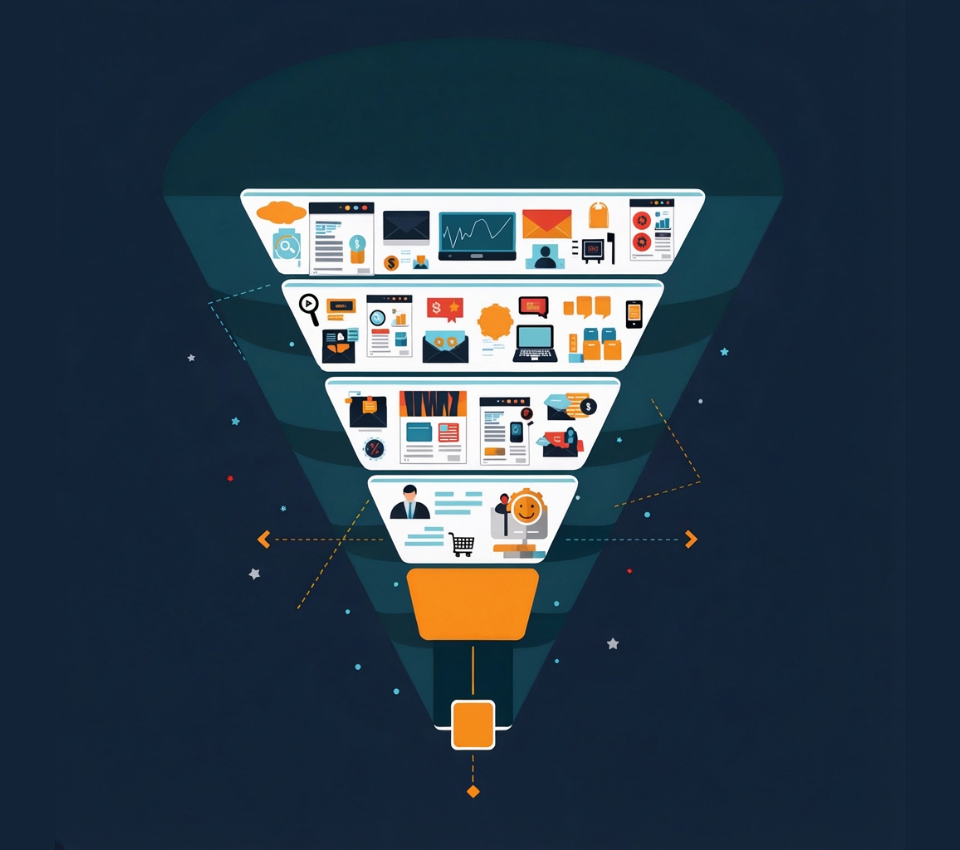
In today’s digital world, people rarely buy from a brand they just discovered. They need to see you, trust you, and understand why your offer matters.
Creative content writer with a knack for storytelling that connects. Wielder of wit, turning “meh” into magic daily.

If you’ve ever launched ads and still didn’t get the sales you expected, the problem may not be your product; it’s your funnel. Many small businesses jump straight into “Buy Now” ads without warming up their audience. But in today’s digital world, people rarely buy from a brand they just discovered. They need to see you, trust you, and understand why your offer matters.
A full-funnel paid strategy helps you guide potential customers from awareness to consideration, building familiarity and trust at every step.
At the top of the funnel, your goal is simple: become visible. This is where cold audiences meet your brand for the first time.
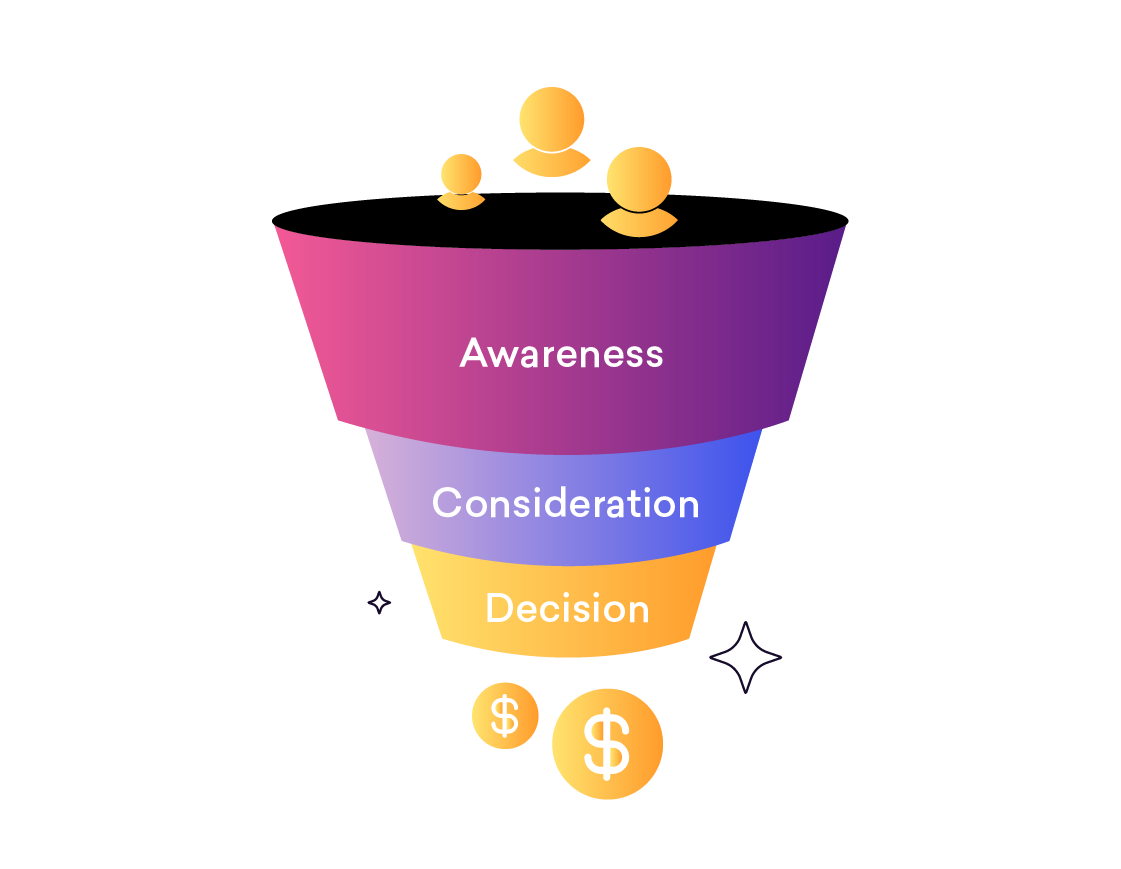
For example, a skincare brand can run a short video showing “What causes dark spots?” while subtly featuring their product. At this stage, don’t push for sales; aim for recognition. Your awareness layer sets the foundation. The more people who see and remember you, the more effective your next stages will be.
Once people know who you are, it’s time to deepen their interest. Engagement campaigns help potential customers spend time with your content, interact with your brand, and begin forming trust.
For example, a small food business can run a carousel ad titled “Why Our Jollof Always Sells Out” showing ingredients, cooking processes, and customer reactions. That builds both credibility and curiosity.
This mid-funnel stage warms up your traffic and filters the people who are actually interested in your offer.
Now that your audience knows you and engages with your brand, it’s time to get more intentional. Consideration ads help customers compare options and understand why your solution is the right fit.
Example: A digital agency like Branderah might run a campaign titled “How Svelte Wigs Achieved 900% ROI with Branderah,” showcasing real results. This is the content that convinces and converts.
The biggest mistake small businesses make is treating ads like isolated posts. A full-funnel paid strategy connects everything in a logical path:
Use retargeting to move people from one layer to the next. For example:
This structure prevents wasted spend and multiplies your results. When you guide prospects through awareness, engagement, and consideration, you increase trust, lower ad costs, and boost conversions.
If you want help building a funnel tailored to your business or want Branderah to audit your current ads, reach out to us.
Reach out today — we’d love to hear from you! Let’s bring your vision to life.